Nonfiction Book Club

The Nonfiction Book Club meets at the Pitkin County Library to discuss a new, challenging, and interesting book each month. We are always welcoming new members. If you would like to join the club please call the library at 970-429-1900 or email Bradley Peate at [email protected].

Audience

Current Selection

The year, 1851. The place, a Quaker farming community turned Underground Railroad stronghold, where a Maryland enslaver had journeyed in pursuit of four men who’d fled his plantation years before. In a few hours, he’d be dead…and twenty-seven men from the village of Christiana would be rounded up and put on trial. Not for his murder, but for treason—for waging war against the United States, at a time when it was a crime against the government to obstruct an enslaver looking to reclaim his “property.”

This is story of what happened in Christiana that September morning—and in the ensuing “trial of the century,” which saw the president himself advise the prosecution on strategy and a sitting congressman serve as lead attorney for the defense. But The Ballad of the Fugitive William Parker is also a much larger tale, one spanning decades, following a whole startlingly diverse community of abolitionists in their fight to convince their fellow Americans of the subversive idea that now found itself on trial: that the nation ought to live up the ideals it was founded on, and respect all men as equals.

It’s a story that whisks readers from the quiet farmlands of Lancaster County—where a self-emancipated man named William Parker, whom legend had it bullets could not kill, rallied his neighbors to ride out each night to battle the slavecatchers who stalked their countryside—to Philadelphia’s genteel Society Hill, where socialite Harriet Forten Purvis had the ear of the mayor (and a cellar filled with fugitives). It’s stylish, propulsive, intimately human tale of bravery, ingenuity, and hope—and of ordinary people with little in common who came together to stand against injustice…and won.

The Ballad of the Fugitive of William Parker A True Story of Love, Murder, Treason, and Ordinary Folks Who Saved America
 

Past Selections

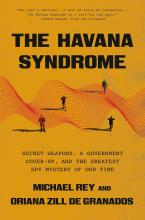
The Havana Syndrome by Michael Rey
 

For nearly a decade, U.S. diplomats, spies, and soldiers around the world have reported sudden, devastating neurological injuries—symptoms eerily consistent with exposure to a directed energy weapon. Victims were told their illnesses were “psychosomatic.” Government agencies dismissed the evidence. And the CIA insisted no adversary was behind it. As the cases grew, from Havana to Hanoi, the media dubbed the phenomenon “the Havana Syndrome.”

In this groundbreaking exposé, 60 Minutes producers Michael Rey and Oriana Zill de Granados reveal the hidden history of the so-called Havana Syndrome: from early attacks in Cuba and China, to the spread across global hotspots from Tbilisi to Vienna, to the mounting evidence implicating an elite Russian “kill” unit. Drawing on more than nine years of reporting, including secret medical records, whistleblower testimony, and intelligence reports, they expose not only the technology behind the attacks but the U.S. government’s effort to downplay and deny them.

Combining the pace of a thriller and the authority of rigorous investigative journalism, this book brings readers inside the lives of officers like “Adam” and “Poly,” whose careers and health were destroyed by the attacks, and Lt. Col. Greg Edgreen, the Pentagon investigator who risked everything to demand accountability. The Havana Syndrome is both a geopolitical saga with chilling consequences for national security and a deeply human story of betrayal and resilience.

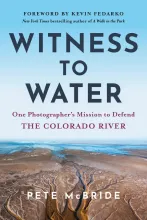
Witness to Water by Peter McBride
 

A breathtaking journey down the lifeblood of the American West

From the crystalline headwaters of the Rocky Mountains to its shocking demise in a foamy, polluted pit in the Sonoran Desert, the Colorado River’s story is one of both epic beauty and profound loss.

In this deeply personal and visually stunning narrative, acclaimed photographer and filmmaker Pete McBride sets out to document the lifeblood of the American West. What begins as an assignment close to his childhood home transforms into a twenty-year odyssey that will change him forever. By packraft, on foot, and from the cockpit of his father’s small plane, McBride bears witness to the river’s grandeur―and the staggering scale of its exploitation.

More than a travelogue, Witness to Water is a moving elegy and an urgent plea. It is the story of a river that no longer reaches the sea, and a powerful reminder of the fragile natural systems we too often take for granted. This book is an unforgettable portrait of a river in peril, and a testament to what we stand to lose when we ask too much of the world that sustains us. Yet within its pages also lies a current of hope―not just for the Colorado, but for the countless rivers worldwide upon which our lives depend.

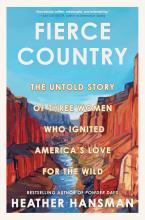
Fierce Country by Heather Hansman
 

Throughout the 20th century, Georgie White, Anne LaBastille, and Dolores LaChapelle did more to inspire our love of the great outdoors than just about anyone.

  • Georgie devoted her life to the Grand Canyon, kickstarting the river running craze in the 40s and igniting the recreation industry
  • Anne, a wilderness guide and bestselling author, protected endangered species and predicted the impacts of climate change from her isolated, off-grid cabin in the Adirondacks.
  • And deep powder skier Dolores developed an environmental philosophy that shaped everything from the radical environmental movement of the ‘70s to modern conservation ethics.

Now, for the first time, outdoor journalist and bestselling author of Powder Days Heather Hansman goes deep into multiple rugged American landscapes to bring three fascinating lives to the forefront of the outdoor movement, affirming their rightful place in the larger story of an evolving American wild.

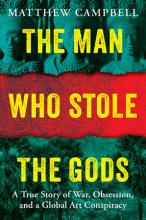
Nonfiction Book Club: The Man Who Stole the Gods- A True Story of War, Obsession, and a Global Art Conspiracy by Matthew Campbell
 

The Man Who Stole the Gods- A True Story of War, Obsession, and a Global Art Conspiracy by Matthew Campbell

From the Killing Fields of Cambodia to the gilded halls of New York’s Metropolitan Museum of Art, a tale of stolen treasures and the battle to reclaim a nation’s soul.

Amidst the chaos of Cambodia's brutal genocide, a new crime wave emerged—one that would sweep across borders and entangle the world's most prestigious art institutions. Priceless treasures of the ancient Khmer Empire, the civilization that produced Angkor Wat, vanished from sacred temples, looted by smugglers and trafficked into the hands of elite collectors. At the center of it all was a man named Douglas Latchford.

Known later as "Dynamite Doug" for the ruthless methods used to extract statues from temple ruins, Latchford orchestrated one of history's most audacious cultural heists. From dusty Cambodian villages to the glittering auction houses of London and New York and institutions like the Met, he played a double game—presenting himself as an expert on Khmer art while secretly flooding the market with stolen antiquities.

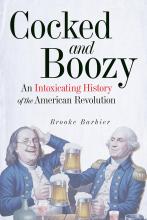
Cocked and Boozy - An Intoxicating History of the American Revolution by Brooke Barbier
 

Cocked and Boozy - An Intoxicating History of the American Revolution by Brooke Barbier

America’s founding generation drank a staggering amount of alcohol by today’s standards.

It influenced their politics, built and sustained their relationships, and drove the economy. Booze was not a small part of colonial society, nor covertly consumed in private spaces—it was integral to American life. 

Historians have been reluctant to discuss the influence of alcohol on the founding of the United States, but it is necessary if we want to gain a full picture of the movement—it’s time to reveal the drunken side of the American Revolution.  

In Cocked and Boozy—two of Benjamin Franklin’s two hundred terms for drunkenness—public historian Brooke Barbier examines the role that alcohol played in spurring, binding, and winning the American Revolution and how it shaped the nascent United States. Every chapter concludes with an eighteenth-century cocktail recipe made for modern tastes, so readers can participate in their own historic tippling.  

The intoxicating story begins in 1763 after the end of the French and Indian War and spans until 1800, with the presidential election of Thomas Jefferson. During these nearly four decades, Americans witnessed unprecedented disorder and prodigious growth, and through it all—powering it, in fact—was alcohol. Put simply, drink helped transform British subjects into Americans.


Join the Library's Nonfiction Book Club, in collaboration with the Americans and the Holocaust Exhibit, for a discussion of the book In the Garden of Beasts: Love, Terror, and an American Family in Hitler's Berlin by Erik Larson. The book discussion will take place on Wednesday, June 24 from 5:30pm to 6:30pm, in the Dunaway Community Room.

To request a copy of In the Garden of Beasts: Love Terror, and an American Family in Hitler's Berlin prior to the discussion, please contact Bradley Peate at [email protected], or 970-429-1941.

In the Garden of Beasts: Love Terror, and an American Family in Hitler's Berlin by Erik Larson

The time is 1933, the place, Berlin, when William E. Dodd becomes America's first ambassador to Hitler's Germany in a year that proved to be a turning point in history. A mild-mannered professor from Chicago, Dodd brings along his wife, son, and flamboyant daughter, Martha. As that first year unfolds and the shadows deepen, the Dodds experience days full of excitement, intrigue, romance -- and ultimately horror, when a climactic spasm of violence and murder unmasks Hitler's true character and ruthless ambition.


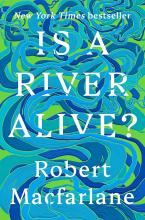
Is a River Alive by Robert Macfarlane
 

Hailed in the New York Times as “a naturalist who can unfurl a sentence with the breathless ease of a master angler,” Robert Macfarlane brings his glittering style to a profound work of travel writing, reportage, and natural history. Is a River Alive? is a joyful, mind-expanding exploration of an ancient, urgent idea: that rivers are living beings who should be recognized as such in imagination and law.

Macfarlane takes readers on three unforgettable journeys teeming with extraordinary people, stories, and places: to the miraculous cloud-forests and mountain streams of Ecuador, to the wounded creeks and lagoons of India, and to the spectacular wild rivers of Canada―imperiled respectively by mining, pollution, and dams. Braiding these journeys is the life story of the fragile chalk stream a mile from Macfarlane’s house, a stream who flows through his own years and days.

Powered by dazzling prose and lit throughout by other minds and voices, Is a River Alive? will open hearts, challenge perspectives, and remind us that our fate flows with that of rivers―and always has.

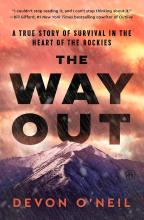
The Way Out A True Story of Survival in the Heart of the Rockies by Devon ONeil
 

“You wanna ski a lap?”

Fifteen-year-old Cole Walters-Schaler couldn't resist. This was why they’d come to the backcountry, after all—three fathers and four teenage children together for a bonding alpine getaway outside Salida, Colorado, in January 2017.

Within minutes, Cole and Brett Beasley, a longtime Forest Service ranger and expert outdoorsman in his mid-forties, had pushed off from their cabin, expecting to be gone for a half hour or so. But an unforgiving blizzard transformed their quick jaunt into a thirty-hour ordeal that would end in tragedy, as the community raced to find them.

The Way Out is the story of those ensuing hours and their aftermath—an almost unbelievable event that shook a tight-knit mountain community and raised difficult questions about life and death, guilt and redemption, and the pursuit of adventure. Why, when we know that the wilderness can kill, can’t we stay away? When the unthinkable happens, how does a community forgive the survivors? And how do the survivors forgive themselves?

Drawing on firsthand interviews with those closest to the tragedy, including the key eyewitness, and written with the gripping intensity of classics such as Into Thin Air and Touching the Void, O’Neil recreates that fateful day. The Way Out is a thoughtful investigation of the allure of the mountains and the aftermath of trauma, and an unforgettable look at life at its very edge.

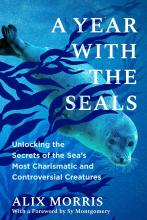
A Year with the Seals
 

Environmental journalist Alix Morris spends an eye-opening year getting to know these elusive, intelligent creatures, investigating the effects of their extraordinary return from the brink of extinction and how we can try to bring nature back into balance.
 
It might be their large, strangely human eyes or their dog-like playfulness, but seals have long captured people's interest and affection, making them the perfect candidate for an environmental cause, as well as the subject of decades of study. Alix Morris spends a year with these magnetic creatures and brings them to life on the page, season by season, as she learns about their intelligence, their relationships with each other, their ecosystems, and the changing climate.
 
Morris also gets to know all of the competing interests in the intense debate about the newly recovered seal populations in our coastal waters, from local fishermen whose catch is often diminished by savvy seals, to tribes who once relied on seal-hunting for food, clothing, and medicine, to seal rescue workers and biologists, to surfers and swimmers now encountering seal-hunting sharks in coastal waters. A Year with the Seals is a rare look at what happens when conservation efforts actually work, and how human tampering with ecosystems continues to have unexpected consequences. But it’s also a gripping adventure story of a journalist determined to understand seals and our relationship with them for herself.

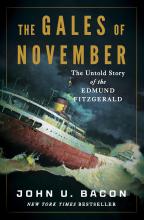
The Gales of November The Untold Story of the Edmund Fitzgerald by John U Bacon
 

On the fiftieth anniversary of the Edmund Fitzgerald’s sinking, the bestselling author of The Great Halifax Explosion tells the definitive story of the “Mighty Fitz.”

For three decades following World War II, the Great Lakes overtook Europe as the epicenter of global economic strength. The region was the beating heart of the world economy, possessing all the power and prestige Silicon Valley does today. And no ship represented the apex of the American Century better than the 729-foot-long Edmund Fitzgerald―the biggest, best, and most profitable ship on the Lakes.

But on November 10, 1975, as the “storm of the century” threw 100 mile-per-hour winds and 50-foot waves on Lake Superior, the Mighty Fitz found itself at the worst possible place, at the worst possible time. When she sank, she took all 29 men onboard down with her, leaving the tragedy shrouded in mystery for a half century.

In The Gales of November, award-winning journalist John U. Bacon presents the definitive account of the disaster, drawing on more than 100 interviews with the families, friends, and former crewmates of those lost. Bacon explores the vital role Great Lakes shipping played in America’s economic boom, the uncommon lives the sailors led, the sinking’s most likely causes, and the heartbreaking aftermath for those left behind―"the wives, the sons, and the daughters,” as Gordon Lightfoot sang in his unforgettable ballad.

Focused on those directly affected by the tragedy, The Gales of November is both an emotional tribute to the lives lost and a propulsive, page-turning narrative history of America’s most-mourned maritime disaster.